

1250吨每小时桥式抓斗卸船机海测立柱设计(含CAD图)
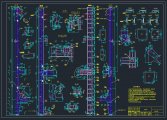
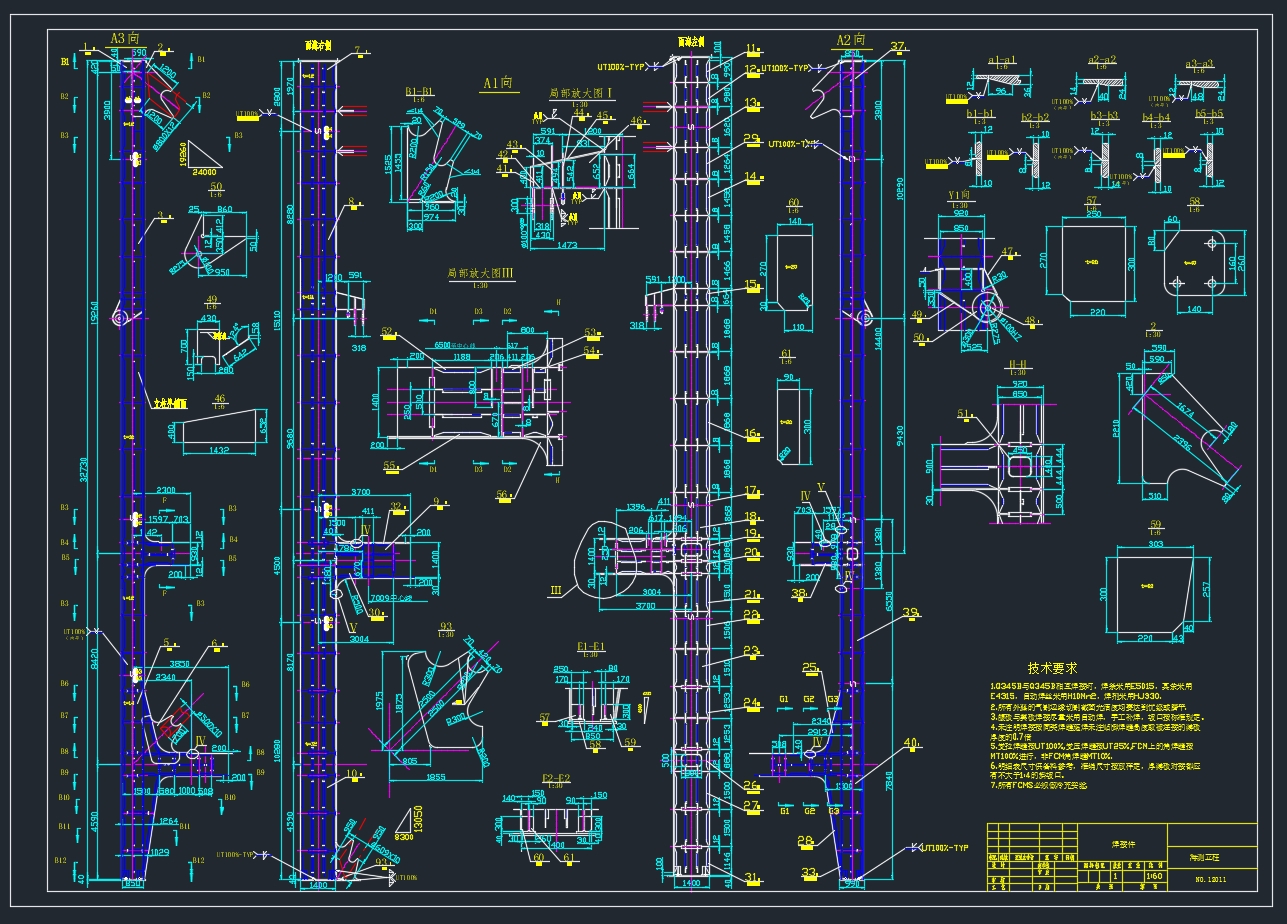
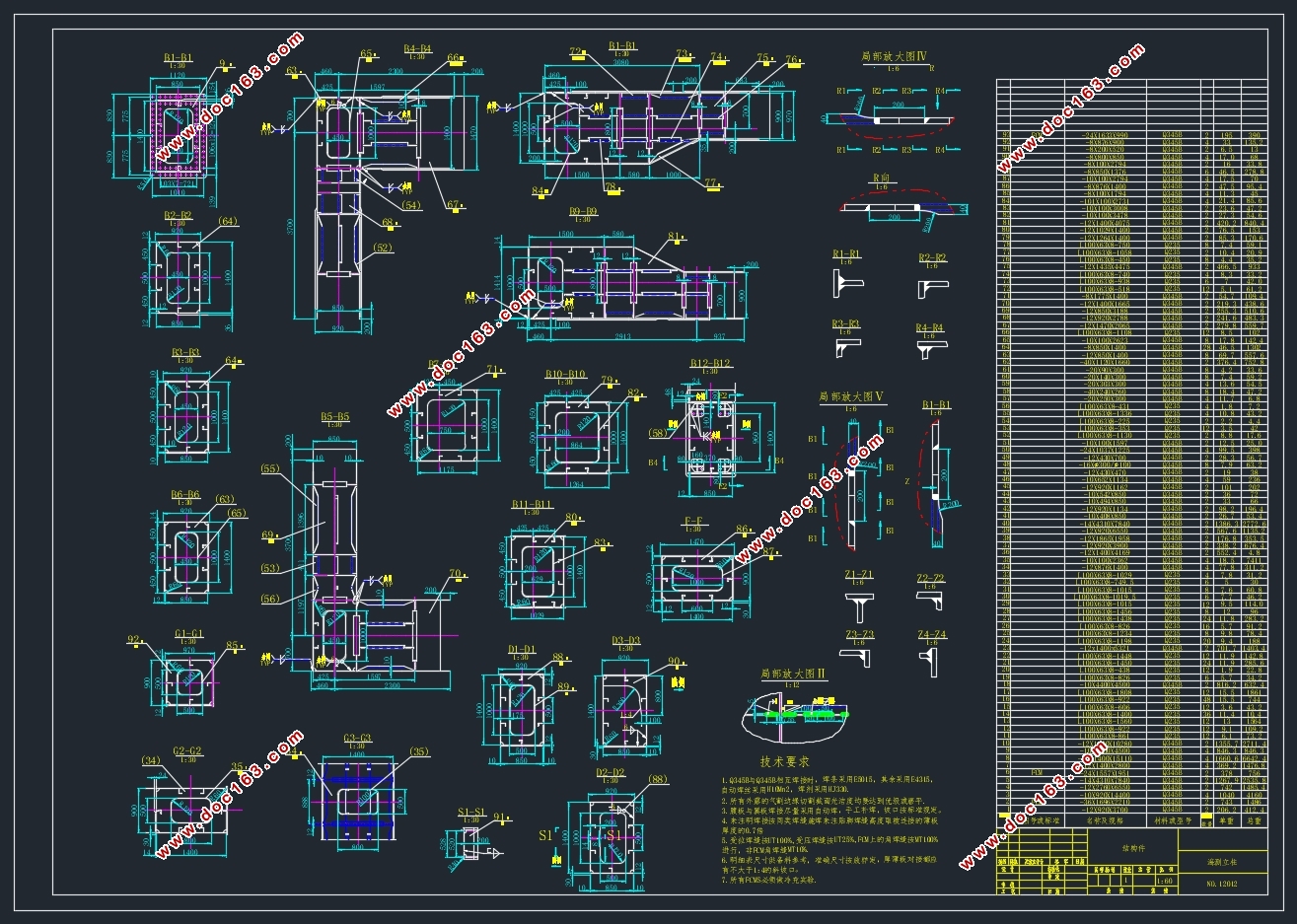
1250吨每小时桥式抓斗卸船机海测立柱设计(含CAD图)(任务书,开题报告,文献摘要,外文翻译,论文说明书18000字,CAD图2张)
摘要
目前,尽管卸船机正在朝着大型化和复杂化的方向发展,但是由于起重机械的发展是一个很漫长的过程,同时有些港口并不需要装卸效率太大的卸船机,因此,作为中型卸船机,在未来的一段时间里,1250t/h桥式抓斗卸船机依旧会是港口进行抓斗作业的主力机型,本文的主要工作,就是对该型卸船机的海测立柱进行设计,首先,通过对整机的受力分析,校核整机的稳定性。然后,建立整机有限元模型,并将海测立柱从模型中独立出来进行受力分析。最后校核海测立柱在各种工况下小车位于不同位置时的结构强度以及稳定性。最终得出:该立柱的结构强度和稳定性满足使用要求。
关键词:卸船机海测立柱 结构设计 稳定性 结构强度
Abstract
At present, the ship unloader is developing towards maximization and complication , but due to the development of hoisting and conveying machinery is a very slow process. In addition, some ports do not need so efficient ship unloaders. As a result, in the next period of time , as a medium-sized ship unloader, the 1250t/h Bridge- type grab ship unloader will still be the main model of hoisting machinery. The main work of this thesis is to design the columns of this ship unloader beside the sea. First of all, I checked the stability of this ship unlodaer with the help of the analysis of stress on this ship unloader. Then, I establised the finite element model of this machinery and analysed the stress of columns of ship unloader beside the sea by isolating the columns from the ship unloader. At last , I checked the structural strength and stability of columns under various working conditions where the trolley was in different positions. Finally, I came to the conclusion that the structural strength and stability of the columns meet the requirements .
[来源:http://Doc163.com]
Keywords: the columns of ship unloader beside the sea Structure design
stability structural strength
技术参数
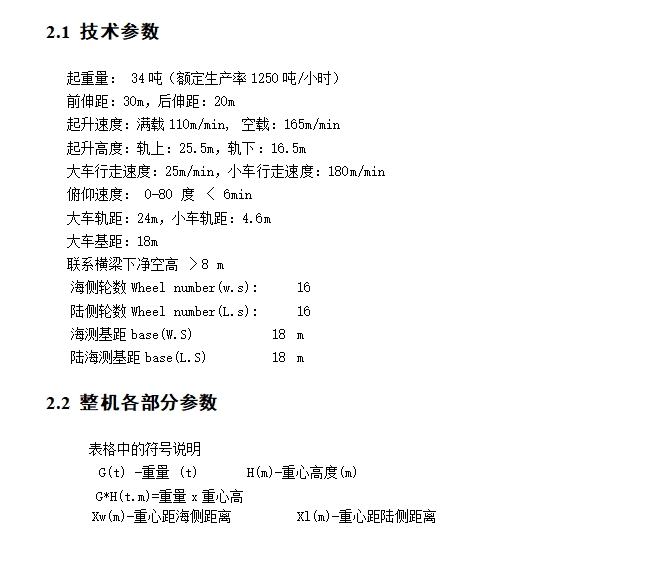
起重量: 34吨(额定生产率1250吨/小时)
前伸距:30m,后伸距:20m
起升速度:满载110m/min, 空载:165m/min
起升高度:轨上:25.5m,轨下:16.5m
大车行走速度:25m/min,小车行走速度:180m/min
俯仰速度: 0-80 度 〈 6min
大车轨距:24m,小车轨距:4.6m
大车基距:18m
联系横梁下净空高 〉8 m
海侧轮数Wheel number(w.s): 16
陆侧轮数Wheel number(L.s): 16
海测基距base(W.S) 18 m [资料来源:www.doc163.com]
陆海测基距base(L.S) 18 m

目 录
第1章 绪论 1
第2章 卸船机整体设计计算 2
2.1 技术参数 2
2.2 整机各部分参数 2
2.2.1 金属结构部分 2
2.2.2整机固定部分 6
2.2.3前大梁总成 7
2.3 腿压计算 8
2.3.1 整机自重产生的腿压 8
2.3.2小车总成产生的腿压 10
2.3.3风载荷产生的腿压 13
2.4 各种情况腿压汇总 28
第3章 整机稳定性验算 30
3.1静载工况 30
3.1.1小车在最大前伸距处 30
3.1.2小车在最大后伸距处 30
3.2动载工况 30
3.2.1小车带额定载荷在前伸距,工作风由陆测吹向海测,小车惯性力作用 30
该条件下,腿压由表3.2组成 30
3.3 在停机位置,大梁仰起,非工作风速55m/s 31
3.3.1 风由陆测向海测吹 31 [资料来源:www.doc163.com]
3.3.3 风由海测向陆测吹 32
3.3.3 风平行于轨道 32
3.4 钢丝绳断裂时的稳定性 33
3.4.1 小车在最大前伸距处 33
3.4.2 小车在最大后伸距处 33
第4章 海测立柱的强度计算 34
4.1 主要参数与设计标准 34
4.1.1 主要参数 34
4.1.2设计标准 34
4.1.3 许用应力 34
4.1.4载荷与载荷系数 35
4.2工作风载(风垂直于大车轨道) 36
4.3 自重载荷 37
4.4载荷组合 37
4.5小车计算位置 38
4.6立柱截面特性计算 38
4.6.1面积计算 39
4.6.2惯性矩计算 39
4.7 立柱受力分析 39
4.7.1 OP1工况下的应力计算 54
4.7.2 OP2工况下的应力计算 55
4.7.3 OP1,OP2工况下的压杆稳定性计算 55
4.8 海测立柱经济性分析 56
第5章 总结 57
参考文献 59
致谢 60 [版权所有:http://DOC163.com]
上一篇:盘式制动器制动主缸柱塞组件压装机设计(含CAD图,CATIA三维图)
下一篇:1200吨每小时卸船机陆侧上下横梁设计(含CAD图)